
Introduction: The Soulful Rebellion Against Sameness
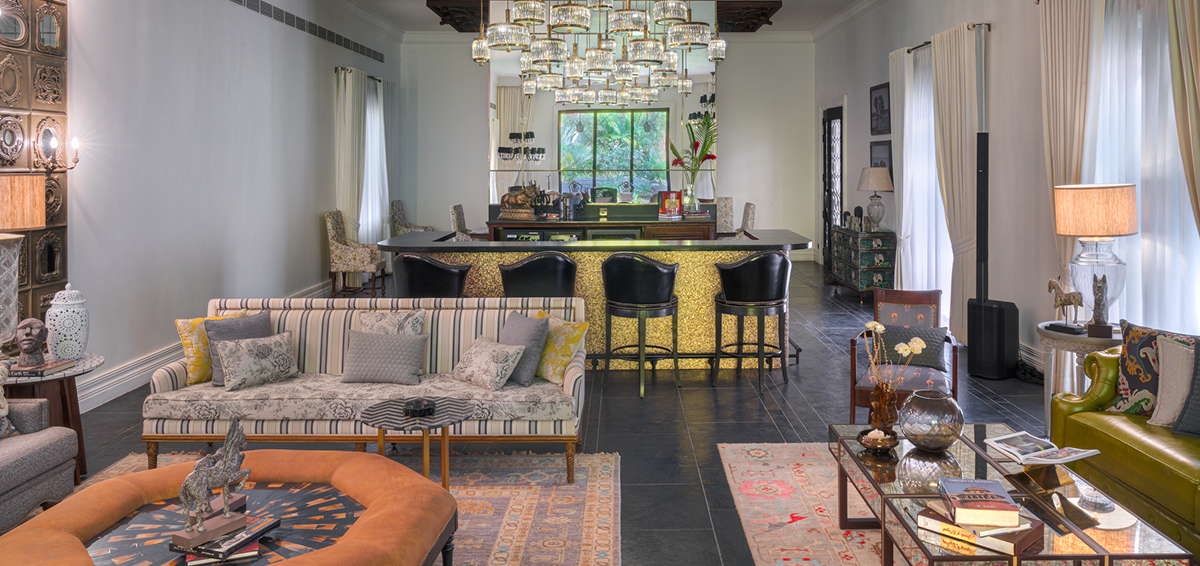
For the better part of a decade, a certain aesthetic has dominated the definition of luxury living: a quiet, almost monastic minimalism. It is a world of clean lines, muted palettes, and a conspicuous absence of personal effects. A silent austerity broadcast from the pages of global design magazines. While beautiful in its own right, this aesthetic of erasure often feels less like a home and more like a beautifully appointed gallery, lacking a central soul. For a growing cohort of global connoisseurs, this pervasive sameness is no longer the pinnacle of sophistication. A powerful counter-current is rising: a soulful rebellion in the form of maximalism.
This is not a call for chaos or clutter, but a joyful, confident declaration of a life richly lived. It is the antithesis of anonymity. Maximalism is the design philosophy for the individual whose life has been anything but minimal. For the collector, the traveller, the patron of the arts. It champions the belief that a home should be an autobiography rendered in textiles, timber, and stone. A place where every object tells a story and every room holds a memory. It is a return to creating spaces that are deeply, unapologetically personal.
Defining Indian-Flavoured Maximalism: More Than Just More
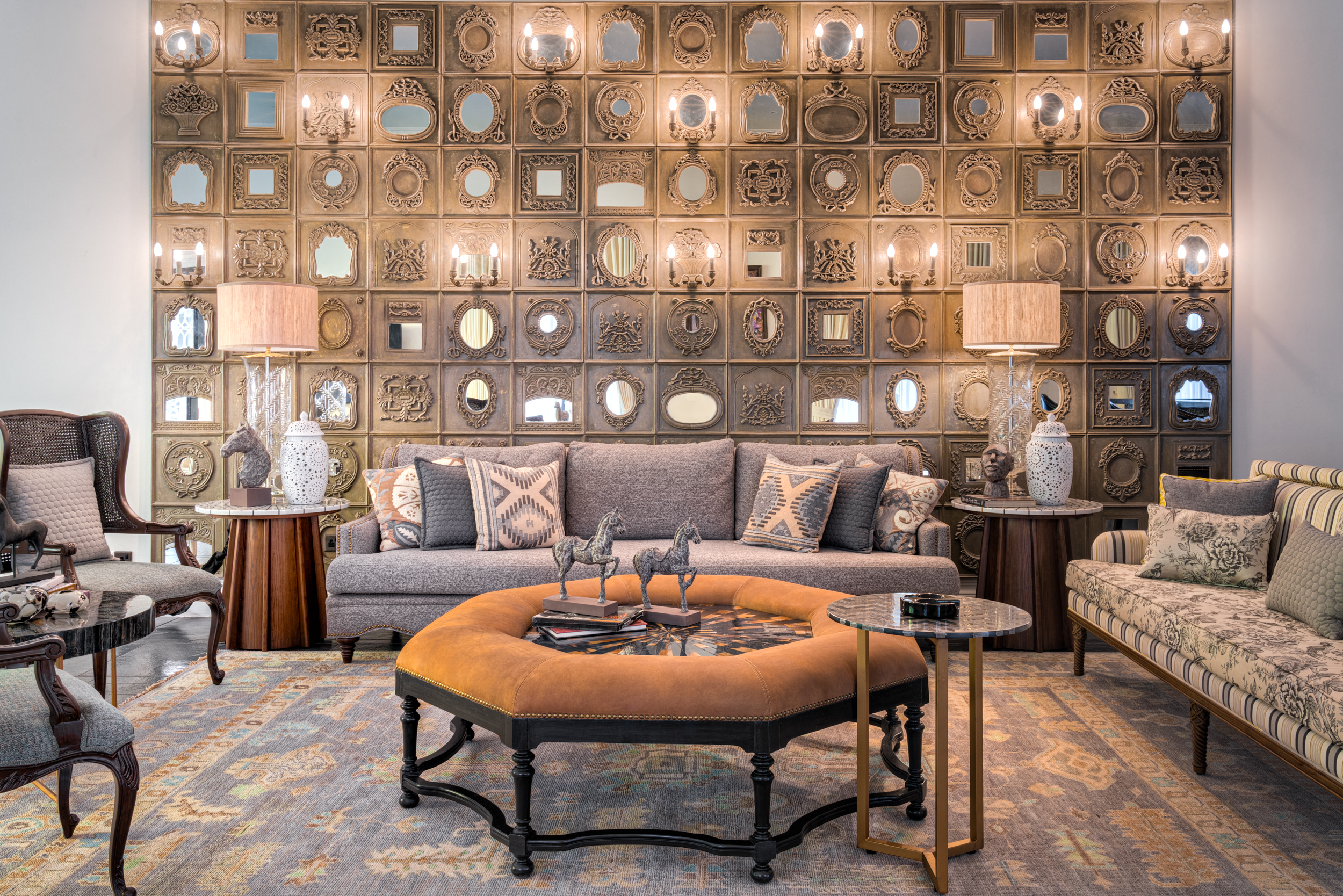
The term ‘maximalism’ can often be misunderstood, conjuring images of chaotic European drawing rooms, a riotous jumble of chintz and competing patterns. While born from the same spirit of expressive freedom, Indian-Flavoured Maximalism operates on a different, more profound plane. Its DNA is not found in fleeting trends but is deeply rooted in India’s timeless and royal aesthetics. It is a philosophy of ‘more with meaning’, where abundance is always underpinned by heritage, craftsmanship, and a powerful narrative.
Think of the sheer, layered opulence of a Rajputana palace, where every surface – from the frescoed walls to the pietra dura inlay on the floor – tells a story of glory and romance. Consider the intricate mirror-work of a Shekhawati haveli, designed to capture and multiply light, creating a living, breathing jewel box. This design language is not about accumulation for its own sake; it is a curated harmony of abundance. It is about engaging all the senses. The coolness of polished marble underfoot, the plush resistance of a silk velvet cushion, the intricate visual journey of a hand-knotted carpet, the faint scent of aged teakwood.
At its core, Indian-Flavoured Maximalism reveres the hand of the artisan. The slight, perfect imperfections in a hand-carved wooden panel, the subtle variations in a hand-blocked textile. These are not flaws, but signatures of authenticity and soul. Unlike mass-produced luxury, this philosophy celebrates the human element, weaving the story of the maker into the story of the home. This is not about creating a historical replica or a museum. It is about channelling a legacy of audacious beauty and intricate storytelling into a contemporary living space, creating an environment that is both magnificent and deeply personal.
The Core Tenets of Maximalism: Building Your Narrative, Layer by Layer
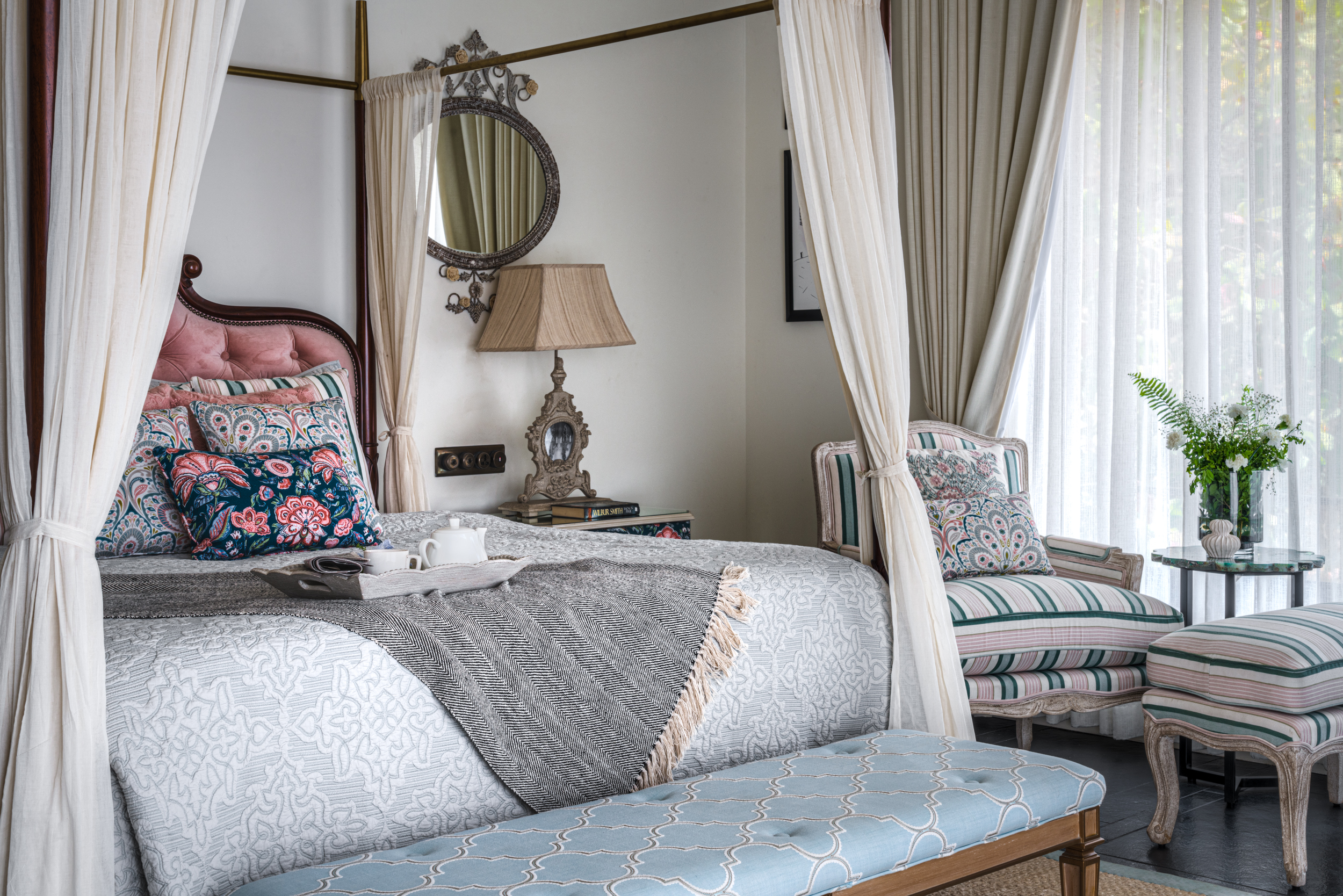
While the vision of an Indian-Flavoured Maximalist home is one of magnificent scale, its execution is rooted in a series of deeply considered principles. It is a meticulous process of layering, where every choice contributes to the overarching narrative of the space. To craft such a home is to become a storyteller, using the languages of craft, personal history, and sensory experience.
A. Celebrate Craftsmanship: The Soul of the Artisan
The foundation of this aesthetic is a profound reverence for true craftsmanship. This means deliberately turning away from the globally ubiquitous luxury market and instead investing in pieces with soul and provenance. To commission a work from a master artisan is to become a patron of living traditions, embedding centuries of skill and heritage directly into the walls of your home.
Think of a dining table, not as a mere surface, but as a monumental piece of hand-carved teak or rosewood that will anchor family gatherings for generations. Imagine floors that are not just covered, but are masterpieces of pietra dura inlay from Agra, or walls that feature the intricate, geometric beauty of Bidri silver inlay work. Each custom-commissioned, hand-knotted carpet from Kashmir or Jaipur is a testament to months, sometimes years, of painstaking labour. These objects possess a gravitas and longevity that transient trends can never replicate. They are future heirlooms, imbued with the spirit of their maker.
B. The Power of the Personal: Your Life as a Curated Collection
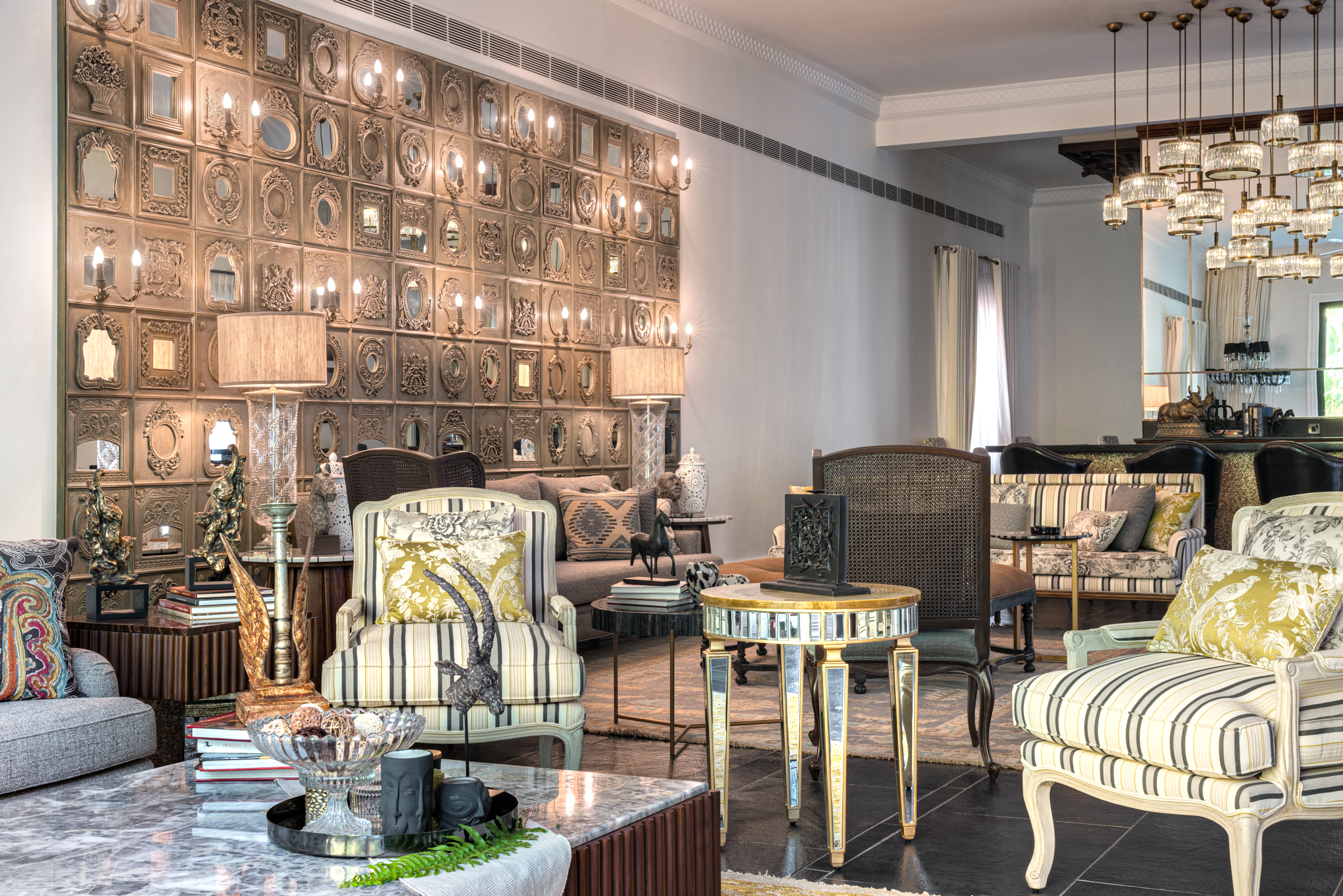
A maximalist home is the absolute antithesis of an impersonal hotel suite. Its primary purpose is to serve as a canvas for the owner’s life journey. This tenet is about weaving your personal story into the very fabric of the interior. This is curation as autobiography.
Dedicate a soaring double-height wall to a gallery of contemporary art acquired on your travels, creating a powerful daily reminder of a life of exploration. Design custom, museum-quality cabinetry to display a cherished collection. Be it rare first-edition books, antique textiles from across the Silk Road, or a lineage of family photographs. The true art of this principle lies in creating dialogues between objects. Placing a hyper-modern sculpture in conversation with a colonial-era heirloom, or layering abstract paintings over traditional, hand-blocked wallpaper. Thus, the space becomes a living memoir. It becomes an intimate and deeply engaging environment that could belong to no one else but you.
C. Fearless Colour & Texture: A Symphony for the Senses
Colour in Indian maximalism is never an afterthought; it is the emotional heartbeat of the home. This is a fearless approach that moves beyond simple feature walls to swathing entire rooms in deep, evocative hues that resonate with cultural memory. The sapphire blue of Jodhpur, the vibrant marigold of a festival, the lush emerald green of a monsoon landscape. These are not just colours, but moods.
This vibrant palette is given depth and sophistication through a deliberate layering of textures that invites touch and engages the senses. Imagine the dramatic contrast of a wall of raw, exposed laterite stone against the opulent sheen of raw silk curtains. Consider the tactile journey from the intricate, raised relief of a carved wooden panel to the cool, monolithic smoothness of a polished marble floor. It is this rich interplay – the cool against the warm, the rough against the smooth, the matte against the gloss – that creates a truly immersive and endlessly fascinating sensory experience.
The Asavilas Vision: Maximalism as Our Signature
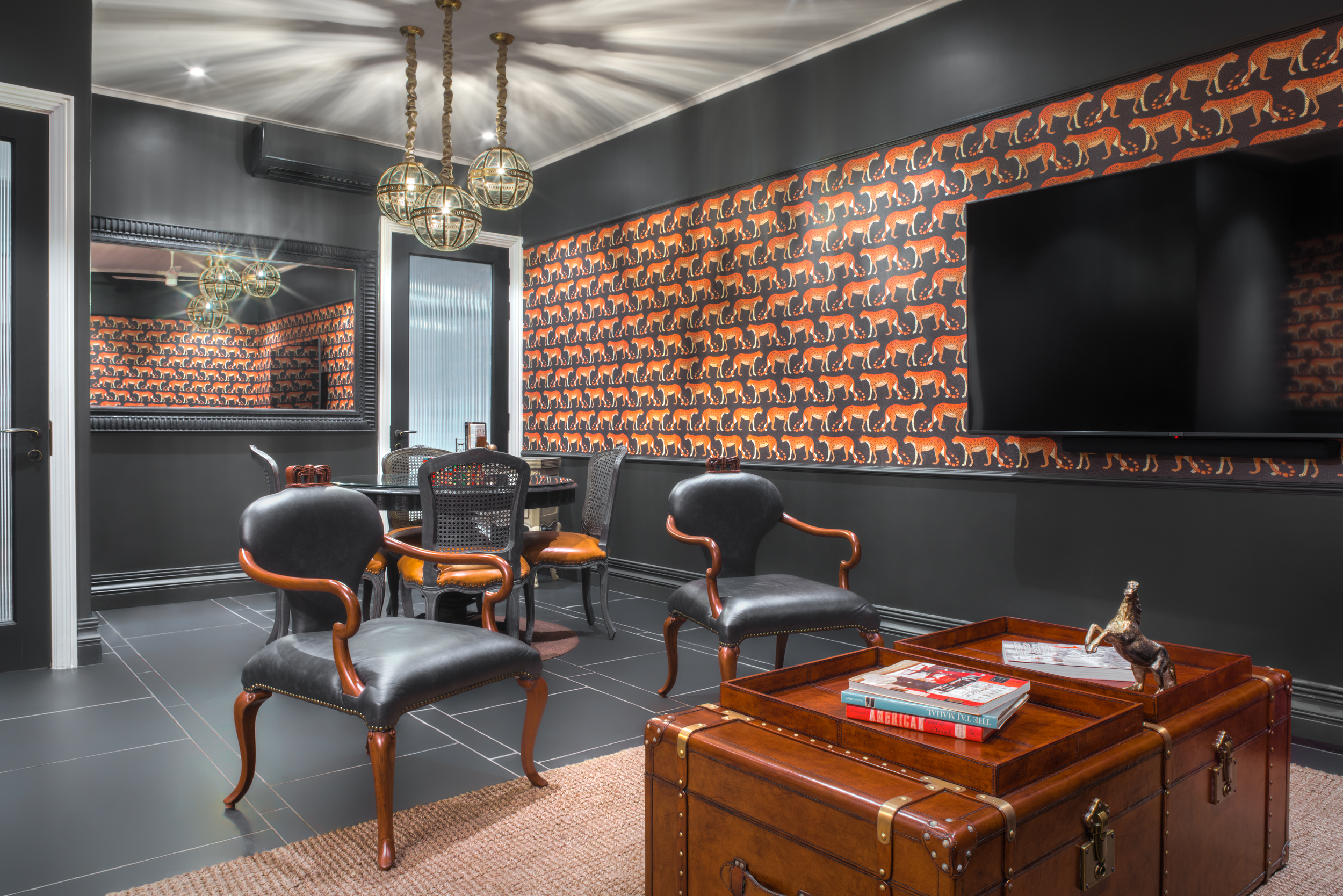
While the tenets of Indian-Flavoured Maximalism inspire us, orchestrating them into a cohesive, architectural symphony requires a vision that begins long before we choose the first textile. At The Asavilas, this philosophy is not an interior design choice. We embed it in the very blueprint of our estates. We believe that a home must first be a worthy canvas, architecturally designed with the scale and grandeur necessary to house a life’s collection of stories and passions. This is our signature.
Our design process begins by creating magnificent volumes and dramatic spaces. We sculpt soaring, double-height atriums that are not merely living rooms, but private galleries awaiting a masterpiece. We design vast, uninterrupted walls that serve as monumental canvases for large-format contemporary art or a custom, hand-painted mural inspired by mythological tales. Natural light is a key material for us. We engineer courtyards, skylights, and modern interpretations of traditional jaali screens to wash the interiors in a dynamic play of light and shadow, illuminating the rich textures and deep colours within.
Executing this vision requires a deep and trusted network of India’s finest master artisans, a network we have cultivated over years. We don’t simply select furniture from a catalogue. Rather, we co-create it with generational craftsmen, commissioning a twelve-seat dining table carved from a single block of timber or designing intricate Bidri metalwork to be inlaid into the doors. This was the spirit behind our Assagao Estate I. Monolithic, custom stone-clad walls became internal art installations and a bespoke crystal chandelier became the room’s jewelled centrepiece.
An Asavilas estate is therefore a turnkey realisation of the maximalist dream. We provide the grand stage, the architectural prowess, and the master artisans; you provide the story.
Conclusion: Your Home as a Magnum Opus
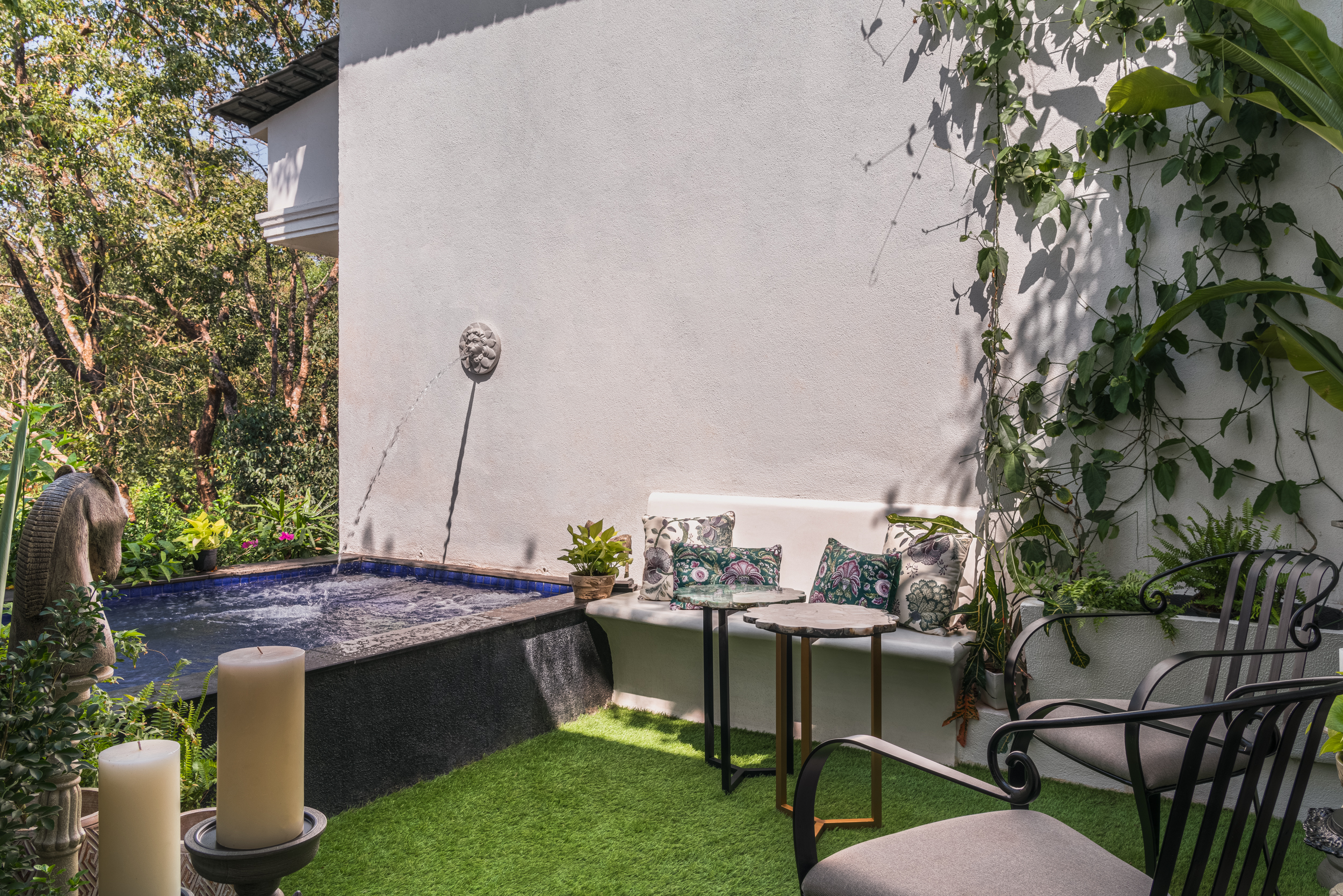
In a world increasingly inclined towards the understated and the uniform, the choice to embrace maximalism is a profound declaration of individuality. It is a confident assertion that a home should not be a space of quiet retreat from the world, but a vibrant celebration of one’s journey through it. To craft a home in this vision is to create your magnum opus. It is the equivalent of an author’s great novel or a composer’s defining symphony. It is a legacy cast in stone and silk, a tangible narrative for generations to come. This is more than a residence; it is your personal gallery, your memoir, your definitive statement. It is your story, authored by you, and masterfully built by The Asavilas.
To begin the conversation about creating your own magnum opus, click here and connect with us for a private and confidential consultation.